Start a new game
Begin with a concept, a prototype or a design. We can shape the scope, prove the risky parts early and take the Unity development through production to launch.
How a project works


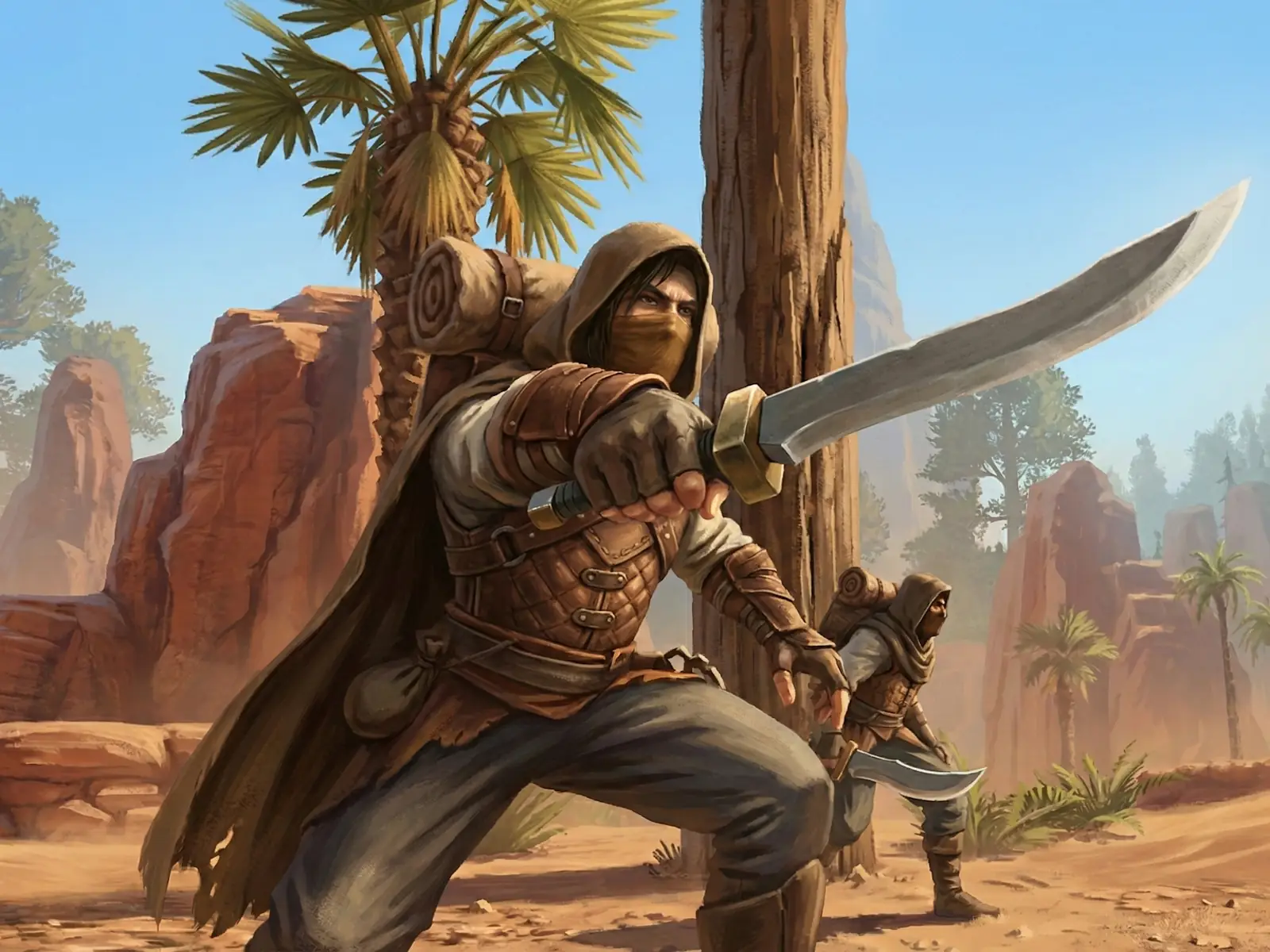

Developed by Ocean View Games as the client's core technical partner.
Our involvement began with a technical code review during the earliest stages of development. We were then brought in to lead engineering, designing the architecture and building the systems that underpin the game, from movement, combat and progression through to networking, backend infrastructure and developer tooling.
Domi is a massively multiplayer online role-playing game (MMORPG) designed around uncapped progression, a persistent player economy and a large multiplayer world. Gameplay is server-authoritative, meaning the server and not the player's device decides every outcome. It runs on FishNet, a networking library for Unity, with networking led by Brinca, the project's network engineer. The full closed alpha, an invitation-only test, ran on a single Amazon Web Services (AWS) EC2 cloud server, keeping operating costs practical for an independent studio.
An unfinished brief is fine. The first conversation helps establish scope.
You do not need a finished game design. We can join at the concept stage, work alongside an existing creative team or take on a project that already has a codebase.
Begin with a concept, a prototype or a design. We can shape the scope, prove the risky parts early and take the Unity development through production to launch.
How a project worksYou have designers, artists or writers in place and need experienced Unity engineers to own the technical delivery around them. We work as an embedded part of your team.
Explore co-developmentBring an existing codebase that has stalled, changed hands or outgrown its foundations. We start by assessing what can be kept and agreeing a practical route forward.
Explore technical auditsEvery project is different, but the shape of an engagement is usually the same. The goals, target platforms and technical risks guide the first build, and we test those decisions while there is still room to change them.
Start with the goals, audience, constraints, existing work and technical requirements. The aim is to understand what actually needs to be built before committing to a delivery plan.
Where useful, prototype the risky mechanics or technical assumptions early and establish the architecture the rest of the project will depend on.
Development runs in practical milestones with regular builds and feedback, so you see the project taking shape rather than waiting until the end to find out whether expectations matched.
New mobile games, engine upgrades and long-running projects engineered by Ocean View Games for its clients.
The Challenge: Build a casual merge game for Mojo Games on iOS and Android.
The Result: Built in two months: the merge loop, offline earnings, ads, in-app purchases, ad mediation and analytics, launched on both stores from one Unity project.

The Challenge: Move Hugecalf Studios' Unity 2018 physics puzzler to Unity 6 and bring it to Windows, Android and iOS for the Epic Games Store.
The Result: Three months of work, mobile builds cut from around 500MB to 150MB, 60fps on every phone and tablet tested, and physics that needed no retuning.


The Challenge: Give GamerCat Studio's growing library of choice-driven stories a foundation for iOS, Android and Steam.
The Result: Core Unity architecture and a content pipeline on Unity Addressables and Unity Cloud Content Delivery, so new books ship without growing the app.

The Challenge: Lead engineering on an MMORPG with no level or skill caps, on an independent studio's budget.
The Result: Server-authoritative FishNet gameplay, progression stored as 64-bit numbers so it has no practical cap, and a closed alpha that ran on a single AWS EC2 server.
Read how the work was done in the Pocket Factory, When Ski Lifts Go Wrong and Bookwood case studies. For learning games, see educational game development. We keep our permanent team small and technically focused. David and Adam stay close to the engineering and retain responsibility for the technical direction. When an engagement needs more capacity or specialist disciplines, we expand the delivery team through trusted contractors we have already worked with. Meet the team.
We shape the engagement around what already exists. That might mean taking a project from prototype through launch, or owning the Unity development alongside your creative team.
Turn the idea into a buildable plan. We define scope, technical risks, architecture, platforms and practical milestones before committing heavily to production.
Validate the core mechanics and technical assumptions early with playable builds that answer the important questions before full production begins. A vertical slice is one short section of the game built to final quality.
Build the systems that make the project work: gameplay, UI integration, progression, content pipelines, persistence, tools and other project-specific engineering.
Create maintainable foundations for projects expected to grow, evolve or support substantial amounts of content and players over time.
Profile real builds, solve performance problems and work through the technical issues needed to make the project stable on its target hardware.
Support deployment, launch preparation, updates and continued engineering after the initial release where the project needs it.
Start with a free conversation about what you are building, what already exists, your target platforms and deadline. If the requirements are clear, we can scope development directly.
For an early concept, a paid discovery phase can produce a technical approach, scope and costed production plan. For an existing game, an audit or a small test build can help establish the scope of the work.
David and Adam stay close to the engineering and technical decisions. We can work alongside your own developers and creative team, bringing in trusted specialists for art, audio, backend systems or quality assurance (QA) where needed.
Production runs in agreed milestones with regular playable builds, followed by testing on the target platforms, launch preparation and any agreed ongoing support.
Meet the teamFree interactive tools to help you scope the work before we talk.
An instant ballpark figure based on your game's scope and complexity.
How long a project takes based on genre, platforms and team size.
Capture your concept, platforms and requirements in a structured brief.
See how Unity, Unreal, Godot and others compare for your project.
We primarily build games and interactive products using Unity. Our work spans commercial games, educational projects, mobile and PC development, browser-based experiences and technically demanding interactive applications.
Recent examples are Pocket Factory, a merge game for Mojo Games on iOS and Android, a Unity 6 upgrade and mobile port of Hugecalf Studios’ When Ski Lifts Go Wrong, and the content architecture behind GamerCat Studio’s Bookwood story library.
If you’re unsure whether your project fits, send us a brief and we’ll tell you directly.
No. We work with game companies, publishers, educational organisations and other teams building interactive products.
The important question is whether the project benefits from the kind of Unity engineering and technical ownership we provide.
Yes, within the right scope.
We have a small senior core team and can expand delivery through trusted contractors and specialists we’ve already worked with on real projects. We’re transparent about capacity and will tell you if a project’s team requirements would be better suited to a substantially larger studio.
Yes. Some engagements involve us owning most of the Unity development, while others involve working alongside an existing engineering, design or creative team.
For dedicated team reinforcement, see our Co-Development service.
Yes. We regularly work with existing codebases.
If the project’s condition or scope is unclear, we may recommend starting with a Technical Audit or Project Rescue engagement before committing to a larger body of work.
It depends on scope, platforms, content requirements and how much of the wider production we need to provide. Development is charged at £500/day per engineer, ex VAT, and the minimum fee for a development project is £15,000.
Once we understand the project, we can provide a structured estimate or proposal. For an early indication, use our Game Development Cost Estimator.
A focused casual game can take a few months. We built Pocket Factory for Mojo Games in two months, including ads, in-app purchases and analytics, and designed, built and self-published our own 4X strategy game Empires Rise on iOS and Android in three.
Content volume, platforms and the number of systems change that a great deal. The Game Development Timeline Estimator gives a range for your project.
Ocean View Games Ltd is a UK company registered in England and Wales (company number 13011771), with its registered office in London. The team works remotely on UK time and collaborates with clients in the UK and abroad.
Unity is a mature cross-platform engine with a strong ecosystem and is particularly well suited to the kinds of mobile, PC, educational and interactive projects we work on.
Deep specialisation means we can spend less time learning the engine and more time solving the project’s actual engineering problems. Our engine comparison tool covers how Unity stacks up against the alternatives.
Tell us what you are building, what already exists and where you need technical ownership or development support.
Tell us about your projectShare your concept, target platforms and current stage. We'll discuss what development support you need, even if the brief is still taking shape.
Location
London, United Kingdom
Response Time
We typically respond within 1 to 2 business days.
Prefer to talk?
Pick a time that suits you and speak to David directly.