

From first message to a costed proposal
You work directly with the two senior Unity engineers who will build your game. We reply within 1 to 2 business days, talk it through on a free 30-minute call, and send a proposal with an approach, timeline and costs within 3 to 5 business days of the call. Then we build in milestones you sign off one at a time.
Summary
- 1 to 2 business days
- For David's personal reply
- Free 30-minute call
- With the engineers who would build it
- 3 to 5 business days
- From the call to your proposal
What happens, step by step
Speak directly with the senior engineers responsible for delivery, from the first conversation through development.
- Step 1
Send your brief
5 minutes
Tell us about the game, the problem and your timeline through the form. An unfinished brief is welcome; we shape the rest together.
You get: a confirmation email and our client guide.
- Step 2
David replies personally
within 1 to 2 business days
David reads every enquiry and replies, either to book a call or with a few questions about the brief first.
You get: a direct reply from the engineer leading the work.
- Step 3
Free discovery call
30 minutes
A call with David, joined by Adam when the project calls for it, about your goals, audience, existing code or materials, constraints and timeline. We are happy to sign an NDA before you share any details.
You get: an honest view of whether we are the right fit, and the most useful next step.
- Step 4
Proposal
3 to 5 business days after the call
We turn the call into a technical approach, scope, timeline and costs, split into milestones. If you are not yet sure what you need, we may recommend Paid Scoping first, or a paid technical audit for an existing project, so the quote rests on evidence.
You get: a written proposal with clear costs before any work starts.
- Step 5
Contract and deposit
agreed in the proposal
Work starts once the contract is signed and the deposit has been paid. We agree the start date with you as part of the proposal.
You get: a confirmed start date, milestones and a named point of contact.
- Step 6
Development
milestone by milestone
We build against the milestones agreed in the proposal and tackle architecture, performance and technical risks early rather than leaving them to the end. At the end of each milestone you get a build to review, and you sign it off before we move on.
You get: a build at the end of each milestone, plus updates on what's done, what's next and any decisions we need from you.
- Step 7
Testing and delivery
throughout, then at handover
We test on real devices throughout, including performance and regression checks, then resolve agreed issues and prepare the final builds.
You get: tested final builds, the agreed code, documentation, build steps and a list of any known issues.
- Step 8
Support
30 days, then as needed
Every project includes a 30-day bug warranty. After that, you choose the level of support that suits you.
You get: defects introduced by our work fixed at no cost for 30 days.
A small senior core, scaled around your project
David and Adam lead the engineering, with specialist support brought in to suit your project.

David Edgecombe
Director and Principal Unity Engineer. Unity Certified Expert and former Technical Developer on RuneScape Mobile at Jagex. Reads every enquiry and leads the technical approach.

Adam Kaye
Lead Unity Engineer. Gameplay, AI and rapid prototyping, with 14 years in game development including award-winning educational games.
When a project needs art, UI/UX, audio, backend or QA, we bring in senior specialists we have worked with before, only when the scope justifies it. The core team stays accountable for the whole project.
Meet the full team →Pick the model that fits the project
After the discovery call, we recommend the model that suits your scope. Most projects are fixed price; evolving work suits time and materials.
Fixed price
For a well-defined scope with clear deliverables and acceptance criteria, priced against agreed milestones.
Best for: ports, Unity upgrades and defined feature builds.
Time and materials
For work where requirements will evolve, billed on the time used.
Best for: ongoing development, R&D and changing requirements.
Co-development
Our engineers join your team, working in your repositories, task tracker and sprints.
Best for: studios extending an existing team to hit a milestone or clear technical debt.
Paid Scoping
We investigate first and deliver findings, recommendations and a realistic, costed development plan.
Best for: ideas that are not yet defined, existing codebases that need a technical audit, and funding bids.
LiveOps retainer
A monthly retainer covering content updates, events, balancing and bug fixes for a live game, at an agreed capacity.
Best for: shipped games that need continuous support.
Not sure where to start?
If you have an existing Unity project, a fixed-price Rapid Audit gives you a senior engineer’s written review and a prioritised fix list, with no obligation to hire us for the fixes. For a new project with open questions, Paid Scoping turns them into a plan you can budget for.
Clear costs before work starts
How pricing works
Every proposal sets out costs against milestones before any work starts. Changes to the agreed scope are quoted separately, so there are no surprises on the invoice. For a rough idea before we speak, see our cost guide.
Deposit and milestones
Fixed-price work starts with a 25 to 50% deposit, due within 14 days. The rest is paid in milestones tailored to your project.
Invoices
Invoices are due within 30 days, and prices exclude VAT. We can work with purchase orders and multi-stage approval for universities and public bodies.
Your project is yours
You own the code and IP
Once the work is paid in full, the bespoke work we create for your project is yours. Any existing Ocean View Games tools are named in the contract and licensed to you, and third-party assets keep their own licences.
NDA as standard
We are happy to sign an NDA before you share any details of your project.
A clean handover
At the end of a project we hand over the agreed code, documentation, build steps and any known issues, so your team or a future partner can pick it up.
What happens after delivery
For 30 days after delivery, we fix defects introduced by our work at no cost. New features, scope changes and issues caused by later changes on your side aren’t covered. To report an issue, contact us with what happened, how to reproduce it, and the device or platform. We reply within 1 to 2 business days.
After the 30 days, choose what suits you:
- LiveOps retainer: monthly content, events, balancing and fixes. LiveOps
- Ad hoc fixes: billed on time used.
- New work: quoted per request.
What this looks like on real projects
Nova Blast
Modernising and Porting a Live Mobile Puzzle Game
How we moved Nova Blast to Unity 2019 LTS, added new tiles and power-ups, extended its level editor and brought the iOS puzzle game to Android.
- Puzzle Game
- Mobile

Pocket Factory
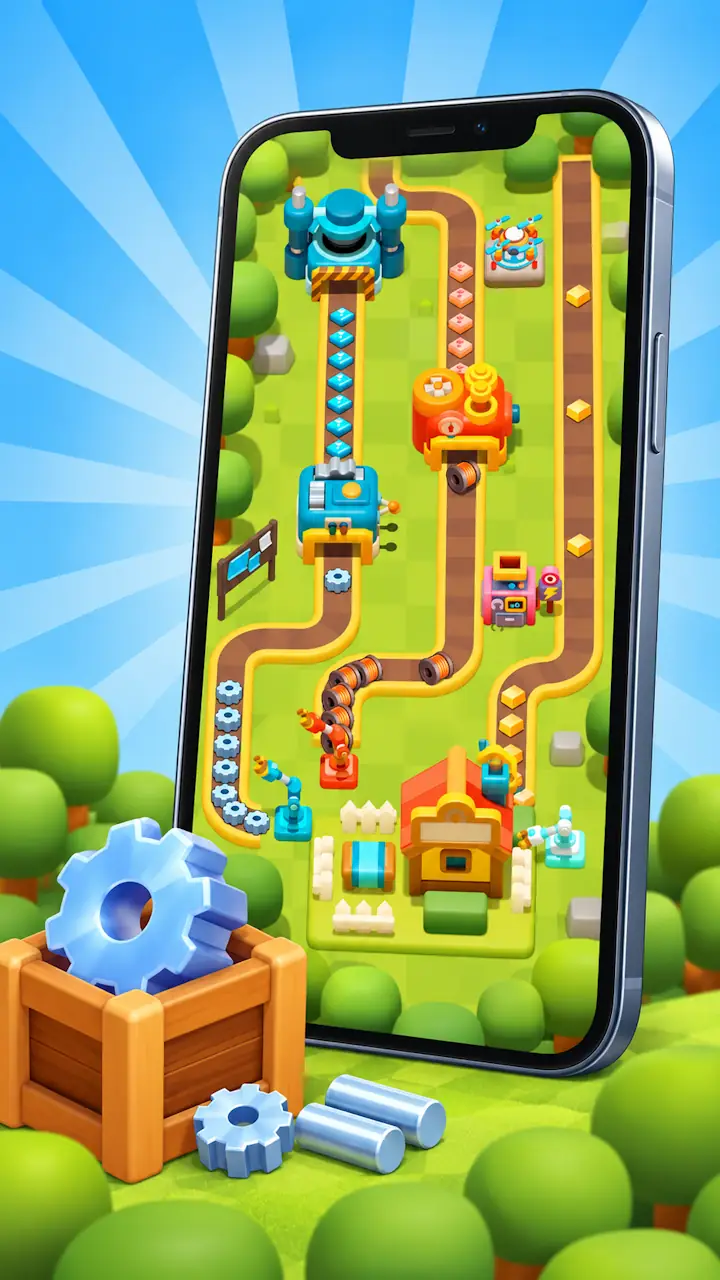
Building and Monetising a Mobile Merge Game
How we built Pocket Factory for Mojo Games in two months, from merge gameplay and offline earnings to ad mediation, IAP and post-launch updates.
- Mobile
- Merge Game
When Ski Lifts Go Wrong
Bringing an Established Game to New Platforms
A three-month Unity 2018 to Unity 6 migration and mobile port for Hugecalf Studios, ahead of a planned Epic Games Store release on Windows, Android and iOS.
- Engine Migration
- Cross-Platform Porting

We work in your tools
 GitHub
 GitLab
 Perforce
 Plastic SCM
 Jira
 Slack
 Microsoft Teams
We adapt to your workflow rather than forcing you into ours.