Build a new educational game
Start with an audience and a learning objective. We can help shape the concept, design the gameplay and take it through prototyping, production and release.
How we develop the idea

Delivered during our team’s previous employment.
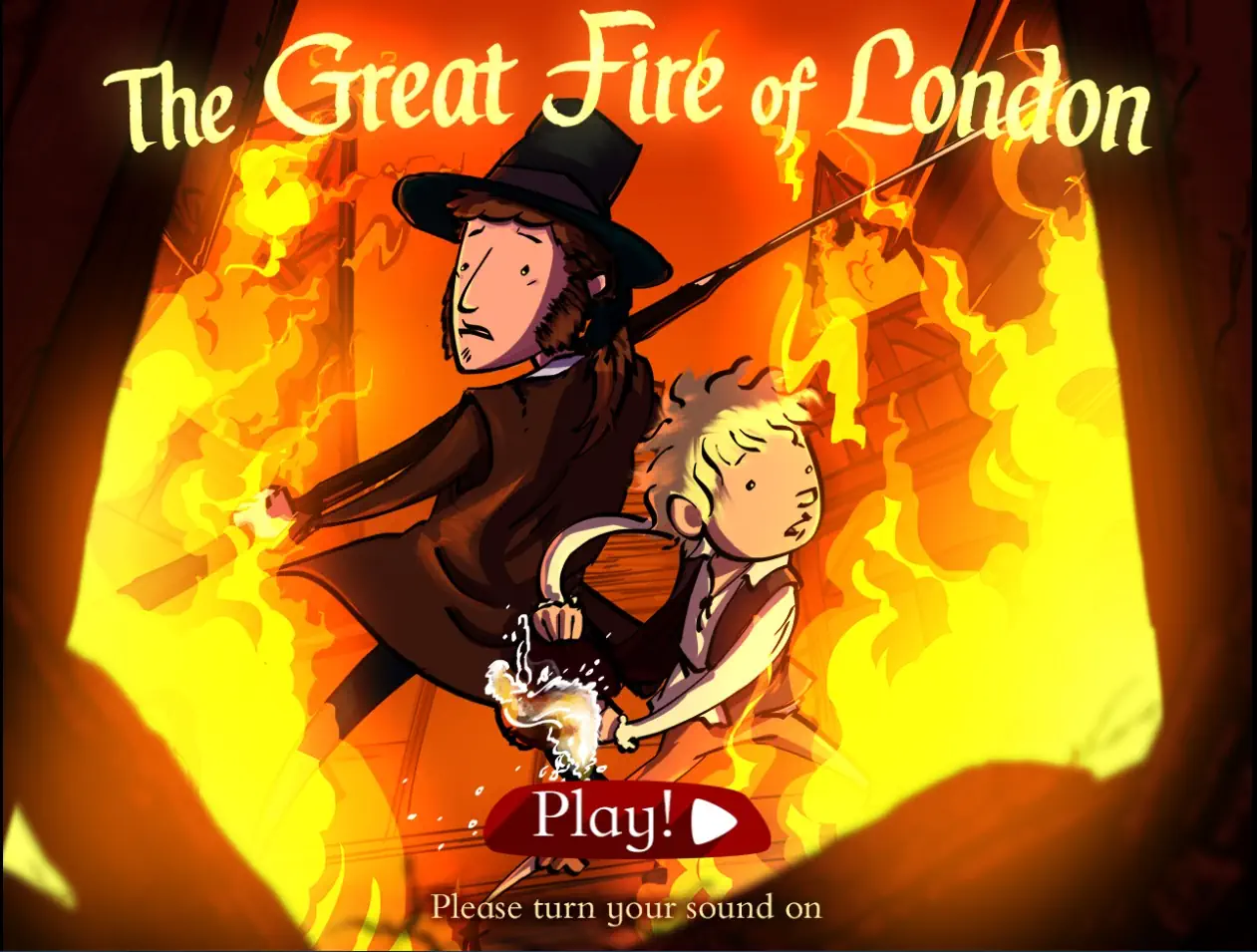
The Museum of London’s educational game explored the Great Fire of 1666, but its Flash technology needed replacing. Our team recreated the experience in HTML5 from a published Flash file without the original source code.
The rebuild preserved the existing educational content and brought the game to modern browsers, keeping the museum’s interactive experience available to a new generation of learners.
An unfinished brief is fine. The first conversation helps establish scope.
You do not need a finished game design. We can join at the idea stage or take on a product that is already in use.
Start with an audience and a learning objective. We can help shape the concept, design the gameplay and take it through prototyping, production and release.
How we develop the ideaBring your curriculum, research, stories or artwork. We work alongside your subject experts to turn that material into interactions learners can explore and practise.
See the Vocab Builder projectKeep useful educational content in service with new platforms, updated technology, more languages or further development. We begin by assessing what can be retained.
See the Fire of London rebuildThe learning objective shapes what the player does. Your educators, researchers or subject experts help us define the skill, review the content and decide how to evaluate the experience.
For a vocabulary game, an objective might be recognising a spoken word and connecting it with its meaning.
An audio-matching activity gives the learner a word to listen to and images to choose from. Feedback and repeated practice become part of the play.
Test a playable version with the intended audience, review it with your educators and refine the difficulty, instructions and feedback before expanding the content.
Educational projects delivered at Ocean View Games and during our team’s previous employment.
The Challenge: Turn pedagogical research from the EU Horizon 2020 iRead consortium into activities for young learners.
The Result: 15 mini-games across four languages. Adam led the project, which received a Serious Games Society award.
The Challenge: Turn The Language Conservancy’s vocabulary research for endangered indigenous languages into a playable learning experience.
The Result: Nine mini-games in one app, with a content pipeline designed to support additional languages over time.
We’re currently the industry partner on a final-year games module at the University of Roehampton.
A classroom, museum gallery and research programme have different practical needs. We agree the requirements that matter to your project before choosing the technical approach.
Browser, desktop, iOS or Android: we agree the target devices early, including school hardware, managed tablets and kiosks. Offline use is scoped where connectivity is limited.
Plan text, audio and content pipelines around the languages you need now and those you may add later. Your subject experts stay involved in reviewing the material.
Agree access needs during discovery and test them throughout development. Controls, timing, text, audio and navigation all need to suit the learners and target platform.
Define what teachers, researchers or administrators need to see. LMS connections, progress reporting and single sign-on are scoped against your actual systems.
Plan data collection and account flows around your audience. We implement the technical measures agreed with your organisation’s legal and safeguarding teams.
Agree ownership of deployment, maintenance and future content before release. We can continue development as your programme grows or its technology changes.
Start with a free conversation about your audience, learning objectives, existing material, budget and deadline. If the requirements are clear, we can scope the development directly.
If the game still needs defining, a paid discovery phase can produce a gameplay concept, technical approach, scope and costed production plan. For an existing product, an audit or prototype may be the useful first step.
David and Adam stay close to the engineering and technical decisions. We work alongside your educators and digital team, bringing in trusted specialists for art, audio or other disciplines where needed.
Production runs in agreed milestones with regular playable builds, followed by testing on the target devices, deployment and any agreed ongoing support.
Meet the teamTell us who the game is for, what you want people to learn, and what content or research you already have. It also helps to know the target platforms, your available budget and any deadline, such as a funding milestone or planned launch.
An incomplete brief is fine. You do not need a finished game design or every technical decision made. We can help identify the missing information and decide whether the project can be estimated directly or would benefit from a short discovery phase.
You bring the subject expertise and any existing educational material, and we handle the game design and engineering around it. We agree who will create and review the content before production begins.
We can bring in artists and audio specialists through our freelance network, or work with your existing creative team. We scope these contributions as part of the project so responsibilities and costs are clear.
Sometimes. We first assess what is available, such as a playable build, published files, artwork, audio or documentation. Without source code, the work may require recreating the game rather than updating its existing code, so feasibility and cost depend on what can be recovered and what needs rebuilding.
During previous employment, our team recreated the Museum of London’s Great Fire of London game in HTML5 from a published Flash file without the original source code. Share what you have and we can assess the options for your product.
Small, tightly scoped projects can be a couple of months. Most educational builds we see run somewhere between three and nine months, and larger multi-language or multi-platform programmes run longer.
Content volume and the number of stakeholders who need to review it tend to affect the timeline more than the engineering does. Our timeline estimator gives a rough indication before we speak.
Yes, and this is common. Clients regularly come to us with a curriculum, a research database, stories, artwork or subject expertise held by their own team, and need the game designed and built around it.
We are comfortable working alongside your educators, researchers, curriculum designers, illustrators or internal digital team rather than replacing them. Our team has done this with academic and institutional partners including Cambridge University Press, the Museum of London and the EU Horizon 2020 iRead consortium during previous employment, and with The Language Conservancy on Vocab Builder.
Where LMS integration is required, we first confirm the target platform, deployment environment and reporting needs. Depending on those requirements, the appropriate route may be SCORM, xAPI or a custom interface with single sign-on. Any standards-based integration is scoped and tested against the actual LMS rather than assumed to work universally.
Our SCORM vs Custom API post compares the approaches. Not every educational game needs LMS integration, so it is worth deciding early whether yours does.
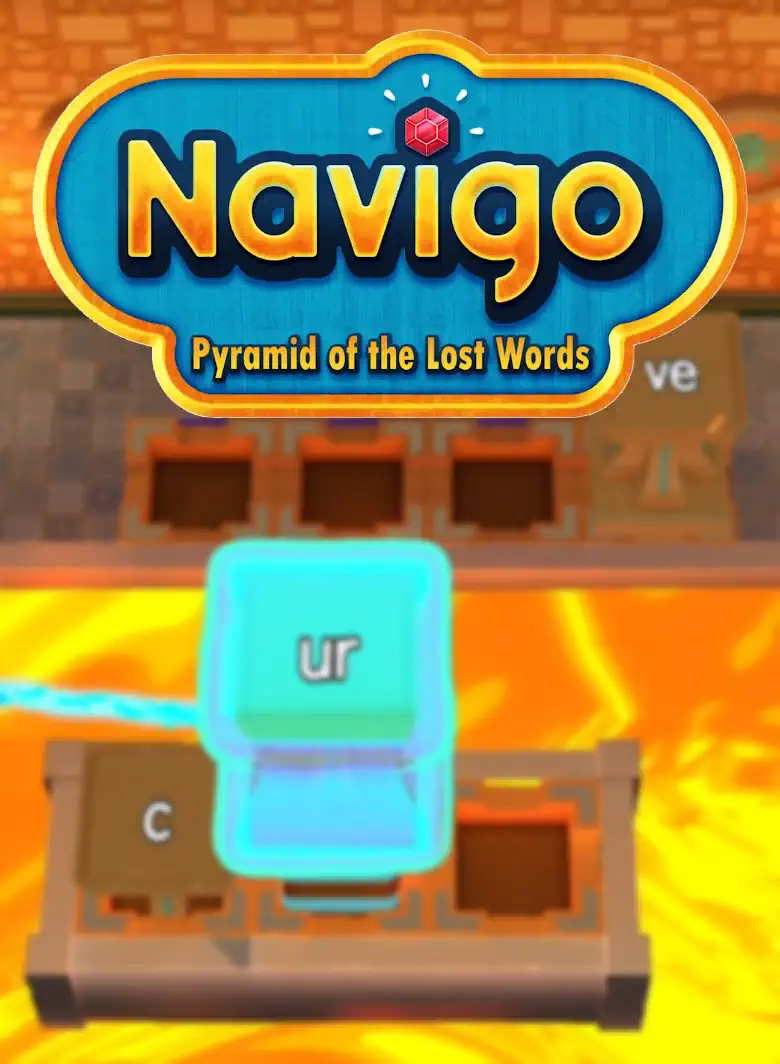
Yes. Our team delivered Navigo for the EU Horizon 2020 iRead consortium during previous employment, working across more than a dozen European research and education partners. That work won a Serious Games Society award in the Digital Game Competition.
We are used to projects with formal reporting requirements, multiple stakeholders and fixed funding windows. Where you are still preparing an application, a paid discovery phase can produce the scope, technical plan and costed budget the bid needs.
Share your audience, learning objective and any content or research you already have. You do not need a finished game design to start a conversation.
Discuss your projectShare your audience, learning objectives and delivery setting. We'll discuss how gameplay, accessibility and technical requirements could fit together.
Location
London, United Kingdom
Response Time
We typically respond within 1 to 2 business days.
Prefer to talk?
Pick a time that suits you and speak to David directly.