
Rebuilding a Museum Flash Game for Modern Browsers
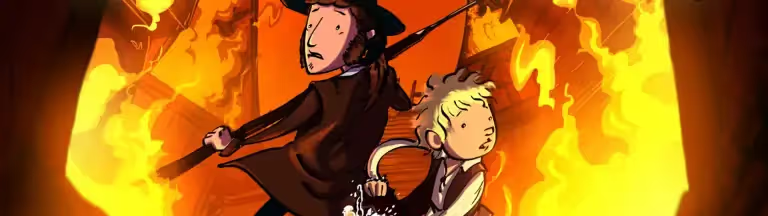
In 2015, David rebuilt London Museum's Great Fire of London game from Flash to HTML5, preserving all of its content and making it work on tablets and modern browsers.
Summary
- The challenge
- London Museum's Great Fire of London game was built in Flash, which never ran on the tablets schools were adopting and was being phased out of browsers.
- David's role
- In 2015, as the sole developer at Fish in a Bottle, David rebuilt the game from scratch in HTML5 and JavaScript, using the Flash original as the reference.
- The result
- Every story, character, artefact and mini-game preserved, playable on tablets and Chromebooks, and still live more than ten years later.
In brief

Overview
- Timeline
- 2015
- Migration
- Adobe Flash to HTML5 (Rebuilt from scratch)
- Genre
- Legacy Modernisation
- Engagement
- Educational
Built with
- HTML5

- JavaScript


| Area | Flash original | HTML5 rebuild |
|---|---|---|
| Technology | Adobe Flash | HTML5 and JavaScript with CreateJS |
| Devices | Desktop browsers with the Flash plugin | Modern browsers, tablets and Chromebooks |
| Input | Mouse | Mouse and touch |
| Layout | Fixed 4:3 | Responsive 16:9, with menus anchored to the screen edges |
| Artwork | Original assets, some at low resolution | Original art reused, low-resolution assets rebuilt |
| Content | Story, characters, artefacts and mini-games | All content preserved |
The rebuild had to look and play like the game teachers already knew.

The Original as Reference
Every interaction, animation timing and win condition in the Flash version was catalogued, then rebuilt in JavaScript to behave the same way.

All Content Preserved
The story, characters, artefacts and mini-games all came across to the HTML5 version.

Art Reused and Rebuilt
Original artwork was reused where it held up, and Fish in a Bottle artist Scott rebuilt the lower-resolution assets for modern screens.
The rebuild also had to work on the devices classrooms were actually using.

Responsive Layout
The fixed 4:3 layout became a responsive 16:9 layout, with the interface separated from the game world so menus anchor to the screen edges on any device.

Touch and Chromebooks
The game works with touch as well as a mouse, on tablets, Chromebooks and modern browsers.

Fast on School Wi-Fi
Assets were packed into optimised sprite sheets, reducing download size so the game loads quickly on slow school connections.
Still Live Over Ten Years Later
The HTML5 version built in 2015 is still live today.
Nothing Lost
All of the original game's story, characters, artefacts and mini-games were preserved.
Ready for the Classroom
Responsive layouts and touch support brought the game to tablets and Chromebooks, which the Flash version could never reach.
Lessons from projects like this also informed our open-source Educational Gamification Systems toolkit. Planning a replacement exhibit or a new commission? Our museum interactive commissioning checklist helps you agree content, hardware, testing and source code handover before development begins.
Need to Modernise a Legacy Game or Interactive?
Tell us what you have today, what technology it relies on and where you need it to run next.
Tell Us About Your Project