

Skip to main contentSkip to contact
Ocean View Games
Ocean View
Games
Unity Game Development Studio

Unity Game Development Studio

Certified Unity experts with RuneScape Mobile pedigree

Why Choose a Unity Specialist?

Unity powers over 50% of all mobile games and is the engine behind titles reaching billions of players. But writing Unity code and shipping a stable, performant Unity game are very different things.

Most agencies can build a prototype. Fewer can ship a game that holds 60fps on a five-year-old Android device, survives a spike of 1,000 concurrent players, or passes first-party console certification without rework. That requires deep, production-hardened experience with the engine's internals, not just its surface-level API.

Our lead developer is a Unity Certified Expert who spent two years on the RuneScape Mobile project at Jagex, solving thermal throttling, memory pressure, and UI adaptation challenges that most Unity developers never encounter. He has since applied that same discipline to architecting server-authoritative MMORPGs with FishNet, rebuilding legacy Flash titles without source code, and engineering 64-bit infinite progression systems that bypass Unity's standard integer limits.

Whether you need a full build, a performance rescue, or senior engineers embedded into your existing team, we bring AAA-grade rigour to every engagement. That is the difference a Unity specialist makes.
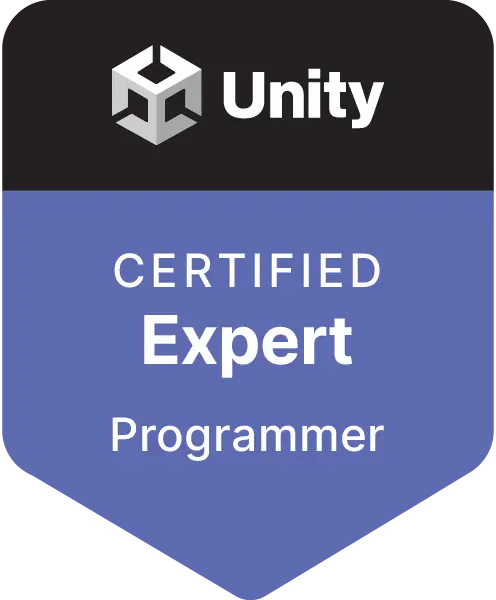
Unity Certified Developer

Unity Certified

Expert-level certification

12 / 14

Years Experience

David (12 years) and Adam (14 years) in game development

12+

Unity Titles Shipped

From mobile to MMORPG

The Business Case for Unity

Cross-Platform from a Single Codebase

Unity builds to iOS, Android, PC, Mac, WebGL, PlayStation, Xbox, and Switch from one project. That means one team, one codebase, and one set of bugs to fix, regardless of how many platforms you ship on. For studios and publishers, this translates directly to lower development costs and faster time-to-market across platforms.

RuneScape Mobile involved adapting a long-running, internally developed MMO for iOS and Android. David was a Technical Developer on that mobile team at Jagex. While RuneScape was not built in Unity, the cross-platform engineering experience informs our Unity work. See the RuneScape Mobile project →

Mature Ecosystem

Unity has the largest developer community of any game engine. That means more available talent, more third-party assets and tools, better documentation, and more Stack Overflow answers when something goes wrong. For a studio or publisher, this reduces hiring risk and makes it easier to find additional developers if you need to scale up.

C# as a Production Language

Unity uses C#, a strongly-typed, enterprise-grade language with excellent tooling (Visual Studio, Rider, Roslyn analyzers). This matters for large projects: strong typing catches bugs at compile time rather than runtime, refactoring tools work reliably, and code reviews are faster. Learn more about C# →

Proven at Scale

Unity powers mobile games with hundreds of millions of installs, MMOs with thousands of concurrent players, and educational tools used by institutions like Cambridge University Press. OVG's own Domi Online demonstrates Unity handling 1,000+ concurrent players with server-authoritative FishNet networking. See the Domi Online project →

Lower Total Cost of Ownership

Unity's licensing model (free for studios under $200K revenue, Plus and Pro tiers above) is more accessible than Unreal's 5% revenue share on gross revenue above $1M. For mobile games with thin margins, this difference is significant at scale.

What We Build With Unity

Mobile Game Development

iOS and Android games built for performance on real devices. Thermal management, battery optimisation, and device fragmentation testing from day one.

MMORPG & Multiplayer

Server-authoritative architecture, FishNet/Mirror networking, matchmaking, and live operations for persistent online worlds.

Porting & Optimisation

PC-to-mobile, cross-platform, and console porting with deep profiling. David worked on the RuneScape Mobile port at Jagex, so we know what it takes.

Educational & Serious Games

Curriculum-aligned games for institutions, designed around confirmed privacy, data-handling, LMS and localisation requirements.

Co-Development

Senior Unity engineers embed directly into your team. Same Slack, same standup, same repo. Scale without hiring.

Legacy Modernisation

Flash-to-Unity, older Unity version upgrades, and codebase rescue. We reverse-engineered the Great Fire of London without source code.

Our Technical Stack

We work across the full Unity ecosystem, selecting the right tools for each project rather than defaulting to a one-size-fits-all setup. Our core proficiency is C# and the Unity Editor (2020 LTS through Unity 6), with deep experience in both the classic MonoBehaviour workflow and Unity's Data-Oriented Technology Stack (DOTS) for performance-critical systems. We have also invested in building reusable game frameworks that let us start new projects from a production-ready foundation rather than from scratch.

On the rendering side, we work with URP and the Built-in Render Pipeline depending on platform targets, and we use the Addressables asset management system to keep memory footprints lean on mobile. For multiplayer and networking, we specialise in FishNet and have production experience with Mirror, building server-authoritative architectures designed to scale.

Our backend and live-ops integrations include PlayFab, AWS GameLift, Firebase, and Unity Gaming Services. On the tooling side, we rely on Unity Profiler, Frame Debugger, and Memory Profiler for deep performance analysis, alongside Git (with LFS) and CI/CD pipelines via GitHub Actions or Unity Cloud Build. For platform-specific work, we maintain familiarity with Xcode, Android Studio, Steamworks, and first-party console SDKs for PlayStation, Xbox, and Nintendo Switch.

Where Unity Fits Best

Where Unity Is the Strongest Choice

Mobile Games (iOS and Android)

Unity dominates mobile. The runtime is smaller, build times are faster, and mobile-specific optimisation tools (Adaptive Performance, frame pacing) are mature.

Cross-Platform Projects

If you need to ship on mobile AND PC AND console from one codebase, Unity is the most efficient path.

2D Games

Unity's 2D tools (Tilemap, Sprite Shape, 2D Physics, 2D Animation) are more mature than Unreal's 2D workflow.

WebGL and Browser Games

Unity's WebGL export is production-ready. Unreal's web support is experimental.

Educational and Serious Games

Unity's accessibility, lower learning curve, and institutional adoption make it the default for education and training.

Multiplayer and Networking

FishNet, Mirror, and Photon Fusion provide server-authoritative networking options. OVG has shipped MMO-scale multiplayer in Unity.

Where Other Engines May Be a Better Fit

AAA Photorealistic Visuals

Unreal Engine 5's Nanite and Lumen provide rendering capabilities that Unity does not match at the high end. If your project requires movie-quality visuals and your budget supports it, Unreal may be the stronger choice.

Open-World Environments at AAA Scale

Unreal's World Partition system handles massive open worlds more natively than Unity's current scene management.

Small Solo Projects with Zero Budget

Godot is fully free and open source with no licensing considerations at any revenue level.

This honesty is deliberate. A reader who sees us acknowledge competitors' strengths is more likely to trust our recommendation when we say Unity is the right choice for their project.

Unity 6 and the Road Ahead

Unity 6 is the current LTS release, bringing render pipeline improvements, multiplayer tools (Netcode for GameObjects updates), and performance enhancements across the board.

OVG has already shipped projects on Unity 6 and handles Unity version migrations for clients on older versions. Whether you are starting fresh or upgrading an existing project, we can guide you through the transition.

What Choosing Unity Means for Your Project

Faster Hiring If You Need to Scale

More Unity developers exist than Unreal developers. Recruitment is faster and typically cheaper.

Shorter Time to Prototype

Unity's editor workflow and asset pipeline are faster for iteration during pre-production. OVG's proprietary rapid prototyping framework builds on this. Rapid Prototyping →

Easier to Find a Co-Development Partner

Most co-development studios work in Unity. You have more options if you need to bring in external help. Co-Development →

Frequently Asked Questions

Costs vary depending on scope, platform targets, and complexity. A focused mobile game or educational app typically starts from around £30,000, while larger projects such as MMORPGs or multi-platform titles can range well into six figures. We provide detailed estimates after an initial discovery call so you know exactly what to expect before committing.
Timelines depend on the scope of the project. A small mobile game or prototype can be delivered in 8 to 12 weeks, while a full-featured multiplayer title may take 6 to 12 months or longer. We break every project into milestones with regular builds so you can track progress throughout development.
No. We are a Unity-only studio. Rather than spreading our expertise across multiple engines, we have chosen to specialise entirely in Unity so that every project benefits from deep, production-level knowledge of the engine. This focus means faster development, fewer surprises, and better performance outcomes for our clients.
Unity Personal is free for organisations below $200K in annual revenue and funding. Unity Pro is required above that threshold and costs $2,310 per seat each year. There is no runtime fee or revenue share.
Yes. Unity supports both URP and HDRP render pipelines. It is not at the level of Unreal's Nanite and Lumen for photorealism, but it handles stylised 3D, mobile 3D, and mid-range PC 3D excellently.
Yes. OVG has built MMO-scale multiplayer in Unity with FishNet. It handles 1,000+ concurrent players with server-authoritative architecture.
Unity is the dominant engine for mobile game development. Most top-grossing mobile games are built in Unity.
Godot is excellent for small solo projects and fully open source. Unity has a larger ecosystem, more third-party tools, better multiplayer support, and a more mature mobile pipeline. Use our engine comparison tool for a personalised recommendation.
Generally no. Engine-to-engine ports are extremely expensive and rarely justified. If your project is already in Unreal, you should continue in Unreal. We recommend porting between platforms, not between engines.

Need Experienced Unity Engineers?

Whether you’re starting a new project, improving an existing one or dealing with a difficult technical problem, tell us what you’re working on.

Tell Us About Your Project