Skip to main contentSkip to service detailsSkip to contact
Ocean View Games
Ocean View
Games
Legacy Game Modernisation, Unity Upgrades and Rebuilds

Legacy Game Modernisation, Unity Upgrades and Rebuilds

Flash to HTML5. Java to Unity. Unity 4 to Unity 6. Senior London-based engineers with named project credentials.

We rebuild legacy games for modern platforms

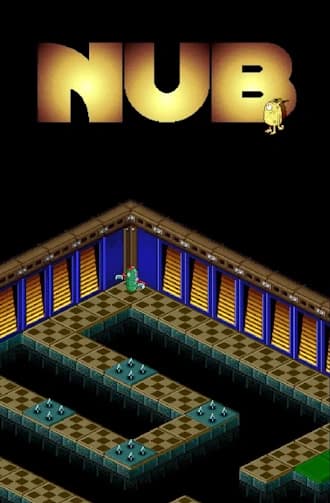
We rebuild legacy games for modern platforms. The Great Fire of London was reverse-engineered from Flash with no source code. Nub was migrated from Java to Unity for iOS, Android, and Steam. We are currently upgrading a live Unity project (Domi Online, 1,000+ concurrent users) from Unity 2021 to Unity 6.3 LTS. If your title is stuck on a deprecated engine, runtime, or platform, we have shipped the way out. Old games age badly. Unity versions go end-of-life, plugins stop receiving updates, render pipelines become maintenance-only, and platform storefronts raise their minimum requirements. A game that earned steady revenue on 2019 LTS last year can quietly become unshippable next year. Modernisation is how you keep what works and move it onto a stable, supported foundation. Ocean View Games modernises live and dormant game projects for studios, publishers, and educational institutions. Every engagement is led by a Unity Certified Expert with shipping experience on games used by millions.

Who this is for

This service fits three common situations. If any of these describe your project, we can help.

Your Unity project is stuck on an old version

You're on Unity 2019, 2020, or 2021. Your build is starting to fail on newer iOS or Android versions. Third-party plugins are drifting out of compatibility. Your team wants to move forward but the upgrade path looks daunting and you can't afford to break a live game to find out the hard way.

Your old game was built in a technology that's effectively dead

Flash is the classic example. Java applets, early HTML5 frameworks, or custom engines from the 2000s fall into the same bucket. The game has proven market demand but can't run anywhere modern. You need a rebuild that preserves the content, design, and audience.

Your game works but needs to reach new platforms

The source is older Unity, often PC-only, and you want to port it to mobile or console. Before you can port, the project needs to be on a supported Unity version with a compatible render pipeline and a build pipeline that targets modern hardware. Modernisation first, port second.

The three service strands

We group modernisation work into three tracks. Most engagements are one of these, or a sequence that starts with one and ends with another.

Unity Version Upgrade

We upgrade Unity projects to a currently supported LTS release. Common upgrade paths include Unity 2019 or 2020 to Unity 6.3 LTS, Unity 2021 to Unity 6, or Unity 2022 to the latest LTS. Large version gaps are typically stepped through intermediate LTS releases so breaking changes can be isolated and fixed at each stage rather than all at once.

Scope of a typical Unity upgrade covers:
  • Editor and package version migration
  • Render pipeline assessment and migration (Built-in to URP where appropriate)
  • Third-party plugin compatibility audit and replacement
  • Deprecated API replacement (networking, input, UI Toolkit, analytics)
  • Build pipeline updates for current iOS, Android, and console SDKs
  • Performance regression testing against the old version
  • Staged rollout with rollback plan for live projects

Before we quote, run the Unity Migration Checker to see what your specific upgrade path involves. The tool outputs breaking changes, deprecated APIs, and a recommended migration sequence based on your current version and feature use. We use the same tool in our discovery process.

Engine Migration and Legacy Rebuild

When the source technology is end-of-life or the source is too costly to port, we rebuild the game in Unity. This is not a conversion, it is a reconstruction that treats the original as a specification. We preserve the game design, progression, assets where licensing permits, and player-visible behaviour, while replacing the engine underneath with a modern, supported foundation.

Typical rebuild projects include:
  • Flash titles rebuilt in Unity and shipped to HTML5 / WebGL, iOS, and Android
  • Java games rebuilt in Unity for mobile and web
  • Custom or proprietary engines rebuilt in Unity for cross-platform reach
  • Abandoned Unity projects where the source is lost or unusable

Our team has done this work. David led a full Flash-to-HTML5 rebuild of Fire of London during his time at Fish in a Bottle. At OVG, Nub was a Java-to-Unity platform migration and Nova Blast involved SDK modernisation alongside the rebuild. The details differ but the approach is the same.

Full Modernisation with Platform Migration

Many modernisation projects start with "we want to bring this game back to market on current platforms." Answering that usually means combining an engine upgrade or rebuild with a port. We handle both in sequence: modernise the codebase to a stable foundation, then port to the target platforms with performance, input, and UI work appropriate to each.

If porting is the headline of your project and the source is already on a supported Unity version, see our dedicated services for mobile porting and console porting. Use the Porting Feasibility Checker to scope the port itself.

Why this matters now

Unity's long-term support schedule has put a deadline in front of several studio populations.

Unity 2019 LTS has reached end of support

Projects on 2019.4 are no longer receiving updates, and platform SDK compatibility is already drifting. iOS build breakage on newer Xcode versions is a common surfaced issue.

Unity 2020 LTS reached end of support in 2023

Unity's own guidance pushes these projects to 2022.3 LTS or Unity 6.

Unity 2021 LTS has ended support

Projects here are already running on unsupported infrastructure.

Unity 6 brings real engine improvements

GPU Resident Drawer, Render Graph API, improved mobile performance, better web platform support. For teams shipping in 2026 and beyond, Unity 6 or 6.3 LTS is the pragmatic target.

Platform storefronts raise minimum requirements continuously

Apple and Google push minimum iOS and Android target API levels up each year. A build pipeline on old Unity often cannot meet the new requirements without modernisation.

Your timeline

If your project is on 2019 or earlier and currently ships revenue, this is urgent. If your project is on 2020 or 2021, it should be planned for this year. If you're on 2022 LTS, you have time but not forever.

How we work

Modernisation is risky when done casually. It is low-risk when done methodically. Our process is built to protect live revenue and live audiences while getting you onto a supported foundation.

Phase 1: Discovery and audit

We review your project, dependency list, build pipeline, render pipeline usage, platform targets, and analytics. We deliver a written report covering the migration sequence, risk areas, and estimated timeline. This is a fixed-scope piece of paid work, typically one to two weeks.

Phase 2: Compatibility staging

We set up a branch of your project on the target Unity version, resolve package and plugin compatibility, and capture the automatic migration changes before any manual work begins. Output is a clean build that compiles and runs on the target version, even if gameplay parity is not yet proven.

Phase 3: Parity testing

We run the modernised build against the old build on matched scenarios and flag regressions. This covers visual parity, gameplay behaviour, save data compatibility, networking behaviour, and performance. Every regression is ticketed and fixed before release consideration.

Phase 4: Platform and store validation

We rebuild for each live target platform (iOS, Android, Steam, console), validate storefront compliance, and test on representative hardware. For live games, this phase includes a rollback plan for returning to the old build if the staged release surfaces problems.

Phase 5: Staged release and monitoring

For live projects, we release progressively, commonly starting with a small percentage of users or a single platform, and monitor crash rates, performance metrics, and user-visible issues. Only once the modernised build is stable in production do we complete the rollout.

For dormant or unreleased projects, phases four and five collapse into a single launch step.

Anchor case study: Domi Online, Unity 2021 to Unity 6.3

Domi Online is a live MMO with over 1,000 concurrent users and 3 million USD in seed funding. When we started, the project was on Unity 2021. Today it runs on Unity 6.3 LTS. The upgrade was not a weekend job. Domi uses FishNet for networking, has a substantial custom render pass stack, relies on Addressables for content delivery, and ships to Windows, macOS, Linux, and soon mobile. Each of these introduced breaking changes across the 2021 to 6.3 gap. We stepped the project through intermediate LTS releases, ran parity tests at each stage, and rolled the new build out to internal and closed-beta groups before full release. No loss of concurrent users during the upgrade window. No rollback required. This is the exact work we do on smaller projects, just compressed in scope. If you're running a live multiplayer game on an old Unity version, we have the scars. Read the Domi Online case study →

Credentials

🎓

Unity Certified Expert

Certification held by a lead on every engagement, with shipping experience on games used by millions of players.

🎮

Ex-Jagex Mobile Team Lead

Shipping credits on RuneScape Mobile (2017 to 2019), a 10+ million player port of a 20-year-old MMORPG codebase.

🏛️

UK-registered, London-based

Company No. 13011771, operating from London. English-native communication, UK timezone, UK IP law.

🌐

Live multiplayer pedigree

Shipped and upgraded projects running with thousands of concurrent users, including Domi Online's 2021 to 6.3 LTS migration.

🕹️

Senior-only team

12 years (David) and 14 years (Adam) of game development experience. No junior-led engagements, no handoffs mid-project.

🔥

Flash-to-HTML5 rebuild experience

From David's prior work on Fire of London at Fish in a Bottle, rebuilding a lost-source Flash title for the modern web.

Legacy Tech Stack

Bridging the gap between vintage code and modern screens:

Adobe Flash Platform Logo
Flash
Unity Game Engine Logo
Unity
WebGL Web Graphics Library Logo
WebGL
HTML5 Web Standard Logo
HTML5

What drives the cost and timeline

Every modernisation project quotes differently because the scope varies so widely. The variables we weight most heavily during scoping are:
📏

Version gap

A single LTS jump (e.g. 2022 to Unity 6) is a fraction of the work of a four-version jump (e.g. 2019 to Unity 6).

🎨

Render pipeline

A Built-in to URP migration roughly doubles the scope of a version upgrade on projects with custom shaders.

🧩

Third-party plugin count

Every abandoned or niche plugin is a potential blocker. Projects with 15 plugins have a different risk profile to projects with three.

📱

Platform target count

Each platform needs its own build validation, and mobile and console add certification overhead.

🔴

Live versus dormant

Live projects require parity testing, staged rollouts, and rollback planning. Dormant projects can accept more rapid iteration.

🧱

Codebase quality

Projects with strong architecture and clean code modernise faster than projects with accumulated technical debt.

For a ballpark figure on your specific project, use our Game Development Cost Estimator and Porting Cost Estimator. For a firm quote, we run a paid Discovery phase (one to two weeks) that produces a written migration plan, risk assessment, and fixed-scope estimate for the full engagement.

What it costs

Every modernisation engagement starts with a fixed-scope audit. After that, most rebuilds run 4 to 12 weeks. The day rates below are ex VAT.

Audit & Feasibility Report

From £2,000

Typically 4 days at our standard senior rate. Written migration plan, risk assessment, and fixed-scope estimate for the full engagement.

Single Developer

£500/day

Day rate ex VAT for one senior Unity engineer on an ongoing basis. Half-day minimum on retainer support.

Two Developers

£900/day

Day rate ex VAT for a paired engagement. Faster delivery on rebuilds and tighter peer review on architecture decisions.

Indie-Friendly Rate

£400 to £450/day

For selected portfolio-fit projects. Apply during Discovery and we will tell you straight whether your project qualifies.

Most rebuilds run 4 to 12 weeks of engineer time. For a ballpark figure on your specific project, run our cost estimator. For a firm quote, request the paid Discovery audit.

What Our Clients Say
Awesome job! I really look forward to working with the guys again very soon!
Project: Nova Blast

Next steps

Request a paid Discovery phase for a written migration plan and fixed-scope estimate, or book a no-pitch call to talk through your project.

Get in touch