Startups and founders
You have a concept that needs a playable build to pitch investors, and may not have an internal team yet. A playable build can demonstrate the concept and support conversations with investors.
Work with startups


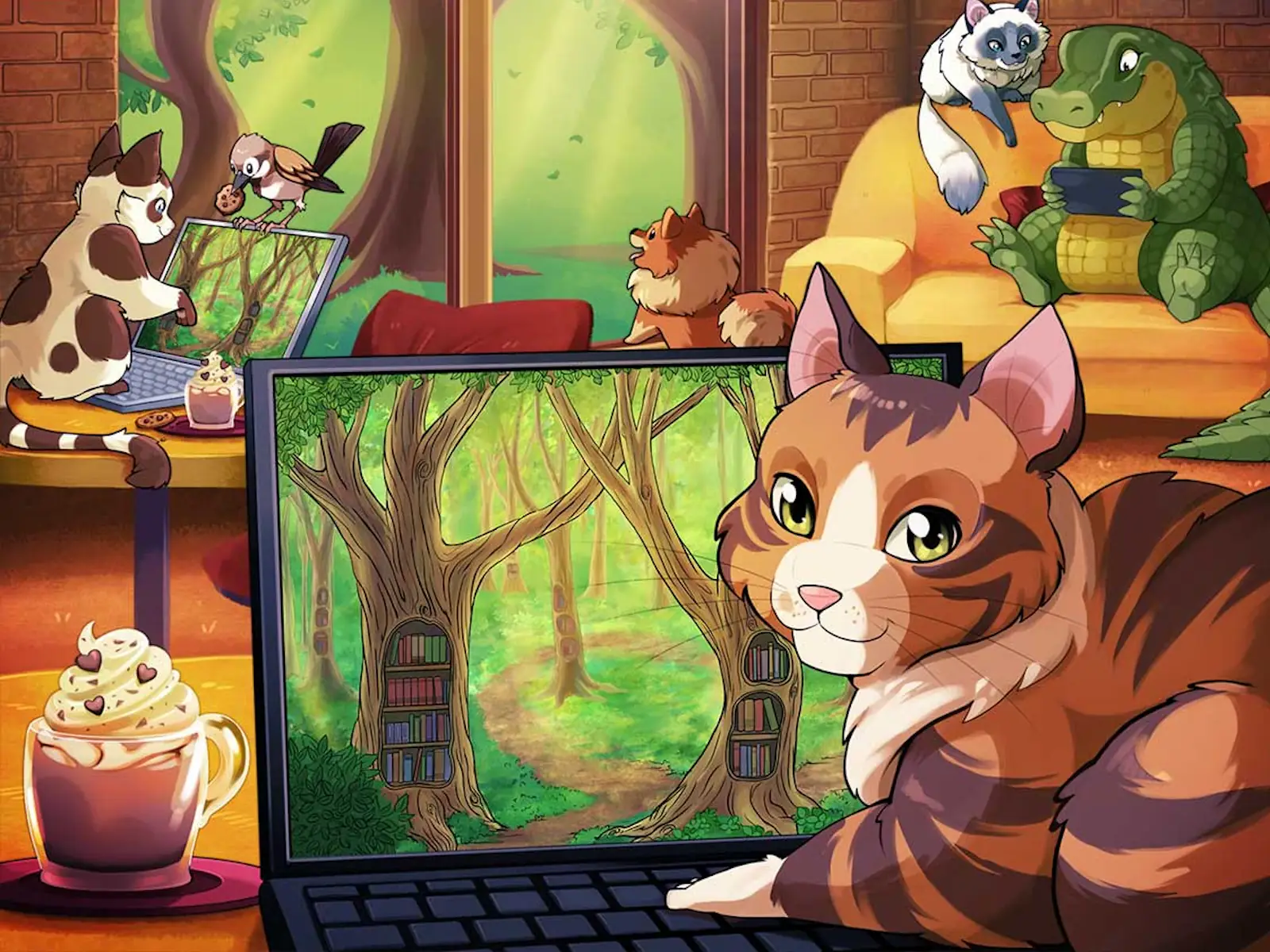

Developed by Ocean View Games with GamerCat Studio.
Bookwood is an interactive fiction platform for iOS, Android and Steam, built to hold a growing library of stories rather than ship as one linear game. GamerCat Studio brought us in early to prove the technical foundation before that library scaled.
We built the content pipeline around Unity Addressables and Cloud Content Delivery, so new books can be added and updated without rebuilding the app or growing the base install. That architecture was validated before full production, not after.
An unfinished brief is fine. The first conversation helps establish scope.
Rapid prototyping serves different needs depending on where you are in your journey.
You have a concept that needs a playable build to pitch investors, and may not have an internal team yet. A playable build can demonstrate the concept and support conversations with investors.
Work with startupsYou have multiple concepts and need rapid prototypes to decide which to greenlight. We can build several in parallel, each testing a different mechanic or market hypothesis.
Work with publishersYour core team is busy on the main title but you want to explore a new genre, platform or mechanic without pulling engineers off production.
See how it worksThe process is built to answer your most important question as fast as possible.
We define the core mechanic, the target platform and the success criteria. What question does this prototype need to answer, and what outcome counts as a pass?
Rapid development using our framework modules, with a playable build every week, then structured playtests and on-device profiling until the core mechanic feels right.
An honest review of what the prototype proved and what questions remain, with a costed production roadmap and a clear proceed, pivot or stop recommendation.
Validation work delivered by Ocean View Games.
Each scope is sized to answer a specific question before you commit further.
Core mechanic, playable and polished, with basic UI, a single-platform build and placeholder art. Answers: does this game feel good to play?
Core loop complete with basic progression, monetisation hooks, analytics and a multi-platform, soft-launch-ready build. Answers: will players come back?
A complete polished section at final quality, with full art, audio and UI, for publisher pitches, funding rounds and greenlight decisions.
Input, cameras, UI scaffolding, analytics, ad mediation and monetisation hooks, all production-grade, plugged in as your prototype needs them.
Mobile, PC or WebGL, with WebGL often fastest for sharing since reviewers play in a browser with nothing to install.
Reusable systems can carry into production. Experimental code may need replacing once the prototype has answered its question; we explain that at handover.
Start with a conversation about what the prototype needs to demonstrate, who it is for and which questions it has to answer.
Discovery settles the single core mechanic and the success criteria, so the build stays focused on proving one thing well.
David and Adam stay close to the engineering. We reuse suitable framework modules and identify which experimental parts need further work before production.
You get a playable build every week, and an honest assessment at the end with a costed roadmap for full production.
Meet the teamCase studies and estimators.
A ballpark figure for a prototype or MVP.
How long a prototype or full build will take.
Taking a proven prototype through to production.
Tell us what you need the prototype to demonstrate, who it is for and which questions you need it to answer.
Tell us about your projectShare your idea and the gameplay or technical assumptions you want to test. We'll discuss a focused playable prototype and how you'll evaluate it.
Location
London, United Kingdom
Response Time
We typically respond within 1 to 2 business days.
Prefer to talk?
Pick a time that suits you and speak to David directly.